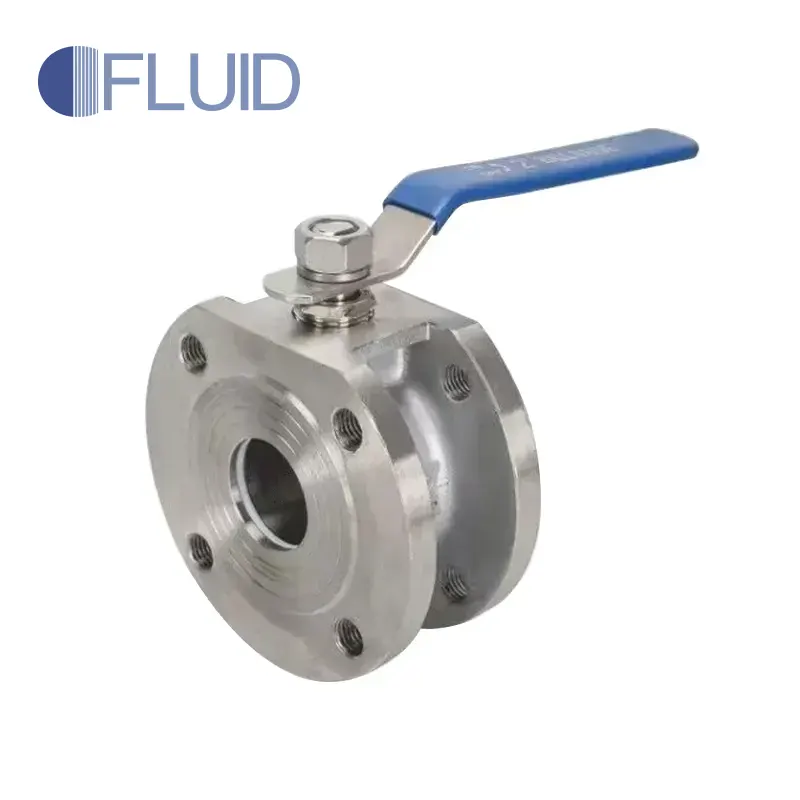
Flanged gate valve is a gate valve with flange connection, which is the most common connection method. Flanged gate valves are stable and reliable when used in pipelines, so flanged gate valves are often used in high-pressure pipelines.
English name; The opening and closing part of the Flange Gate Valve is the gate, the movement direction of the gate is perpendicular to the direction of the fluid, the gate valve can only be fully opened and fully closed, and cannot be adjusted or throttled. The gate has two sealing surfaces. The two sealing surfaces of the most commonly used gate valve form a wedge shape. The wedge angle varies with the valve parameters, usually 50, and 2°52' when the medium temperature is not high. The gate of the wedge gate valve can be made into a whole, called a rigid gate; it can also be made into a gate that can produce a small amount of deformation to improve its manufacturability and make up for the deviation of the sealing surface angle during processing. The plate is called an elastic gate.

Flanged gate valve drawing
The type of gate valve can be divided into wedge gate type gate valve and parallel gate gate valve according to the configuration of sealing surface, wedge gate type. This type of valve should generally be installed horizontally in the pipeline.
When the gate valve is closed, the sealing surface can only rely on the medium pressure to seal, that is, relying on the medium pressure to press the sealing surface of the gate to the valve seat on the other side to ensure the sealing of the sealing surface, which is self-sealing. Most gate valves are forced to seal, that is, when the valve is closed, the gate must be forced against the valve seat by external force to ensure the tightness of the sealing surface.
The gate of the gate valve moves linearly with the valve stem, which is called a lift-rod gate valve (also called an open-rod gate valve). Usually, there are trapezoidal threads on the lift rod. Through the nut at the top of the valve and the guide groove on the valve body, the rotary motion is changed into a linear motion, that is, the operating torque is changed into the operating thrust.
When the valve is opened, when the lift height of the gate is equal to 1:1 times the diameter of the valve, the fluid channel is completely unobstructed, but this position cannot be monitored during operation. In actual use, the apex of the valve stem is used as a sign, that is, the position where it cannot be opened, as its fully open position. In order to take into account the lock-up phenomenon due to temperature changes, it is usually opened to the top position, and then back to 1/2-1 turn, as the position of the fully open valve. Therefore, the fully open position of the valve, according to the position of the gate.